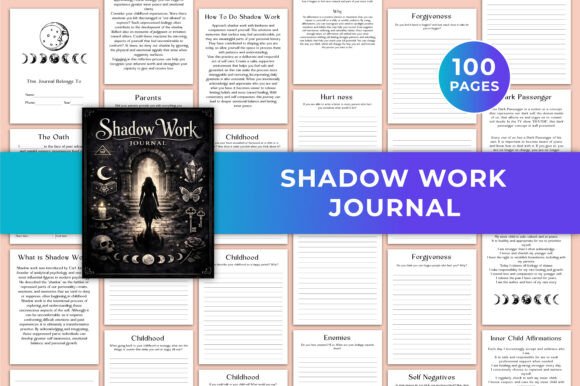
Shadow Work Journal Canva KDP Graphic: A Deep Dive into Self-Discovery Design
Creating a meaningful journal that facilitates genuine inner work requires more than just beautiful pages; it demands a thoughtful, empathetic design framework. The Shadow Work Journal Canva KDP Graphic template is engineered precisely for this purpose. It moves beyond generic notebook aesthetics, offering a structured yet flexible environment for exploring Carl Jung’s concepts of the subconscious. For designers, content creators, and self-help entrepreneurs, this resource serves as a foundational design asset, bridging the gap between psychological depth and visual elegance.
The visual personality of this template is distinct and intentional. It utilizes a dark, mystical theme—think deep indigos, charcoal grays, and subtle violet accents—to evoke a sense of safety and introspection. This isn't a bright, cheerful planner; it’s a sanctuary. The typography choices within the Shadow Work Journal Canva KDP Graphic balance legibility with emotional resonance, often pairing clean sans serif fonts for prompts with more expressive, perhaps slightly ethereal, display fonts for titles. This combination ensures that while the content is serious, the user experience remains inviting and professional.
Visual Identity and Emotional Resonance
The core appeal of this journal template lies in its ability to visually communicate transformation. The design language—cohesive, structured, yet with a hint of the organic—mirrors the shadow work process itself. Each page is crafted to guide the user from darkness (suppressed memories, hidden emotions) toward light (awareness, healing). For entrepreneurs in the wellness or personal development space, this template offers a ready-made brand identity. It conveys expertise and trust, signaling to your audience that the content within is curated with care and psychological insight.
Consider the practical applications. If you are a coach or therapist, using the Shadow Work Journal Canva KDP Graphic allows you to offer a high-value digital product without starting from scratch. The Canva editor makes customization straightforward. You can adjust the color palette to match your existing brand, swap out fonts to reflect your unique voice, or even restructure sections to focus on specific therapeutic modalities. The template’s strength is its balance: it provides a strong, professional starting point that remains fully adaptable.
Strategic Applications for Creators and Brands
For graphic designers and marketers, this template is a case study in effective editorial design. The layout guides the eye naturally from one section to the next, using visual hierarchy to emphasize key prompts and exercises. This is crucial in journal design, where clarity prevents user overwhelm. The inclusion of diverse sections—from the initial "Shadow Work Oath" to "Inner Child Healing Exercises" and "Healthy Coping Worksheets"—demonstrates a comprehensive approach to the subject matter, enhancing the perceived value of the final product.
When integrating this into a broader product line, think about font pairing and consistency. The template’s default typography is chosen for its readability and mood, but you might consider aligning it with your existing brand identity. If your primary brand uses a strong, modern sans serif font, you could apply it to the body text of the journal for cohesion. Conversely, if your brand is more expressive, you might introduce a complementary script font for chapter titles. The goal is to make the journal feel like a natural extension of your creative universe.
Beyond digital use, the Shadow Work Journal Canva KDP Graphic is optimized for print, particularly for Amazon KDP. This is a significant advantage for publishers and creators looking to enter the lucrative self-help market. The design accounts for bleed, trim, and safe zones, ensuring a professional print result. This attention to technical detail is a hallmark of a premium design asset, saving you hours of pre-press troubleshooting.
Maximizing Impact Through Thoughtful Customization
While the template is powerful out of the box, true magic happens in customization. Don’t just change the colors; consider the user’s journey. The prompts are deep—questions about childhood, trust, forgiveness, and desires. Your design choices should support this emotional labor. Softer, matte color palettes can feel more nurturing, while high-contrast, sharp layouts might appeal to a more analytical audience seeking structure.
Think about the user experience in different formats. For a digital PDF version, ensure interactive fields are easy to type in. For a printed book, pay attention to paper texture recommendations or binding styles that allow the book to lie flat—essential for journaling. The Shadow Work Journal Canva KDP Graphic provides the skeleton, but your strategic decisions about these physical or digital touchpoints will define its success in the market.
Finally, leverage the template’s educational components. The sections explaining Jungian psychology and defining shadow work are not just filler; they establish authority. For content creators, this is an opportunity to position yourself as a knowledgeable guide in the self-discovery niche. The design supports this by presenting information clearly, using visual cues to differentiate between educational content and personal reflection space. This thoughtful approach to modern typography and layout transforms a simple journal into a transformative tool.